
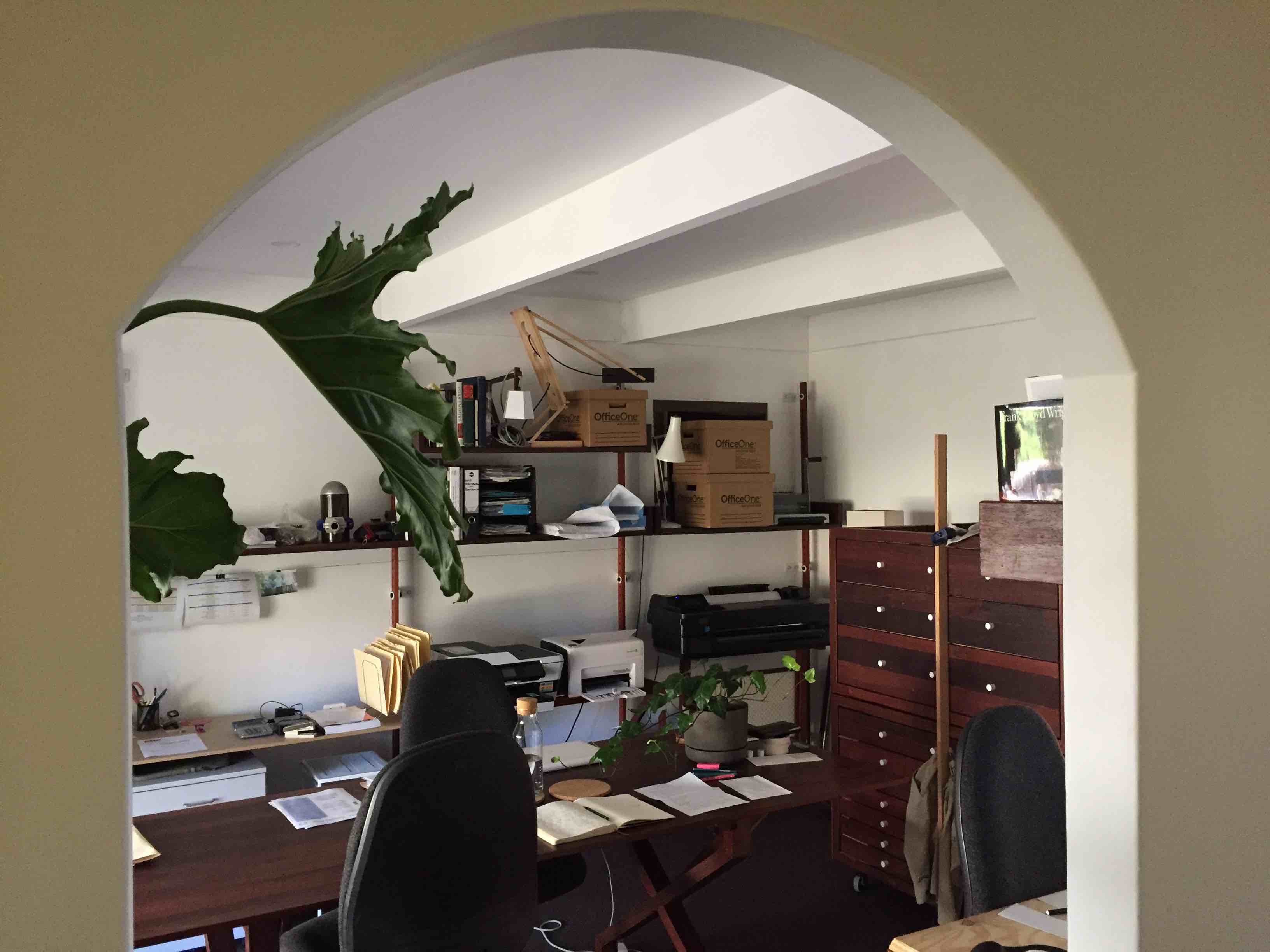
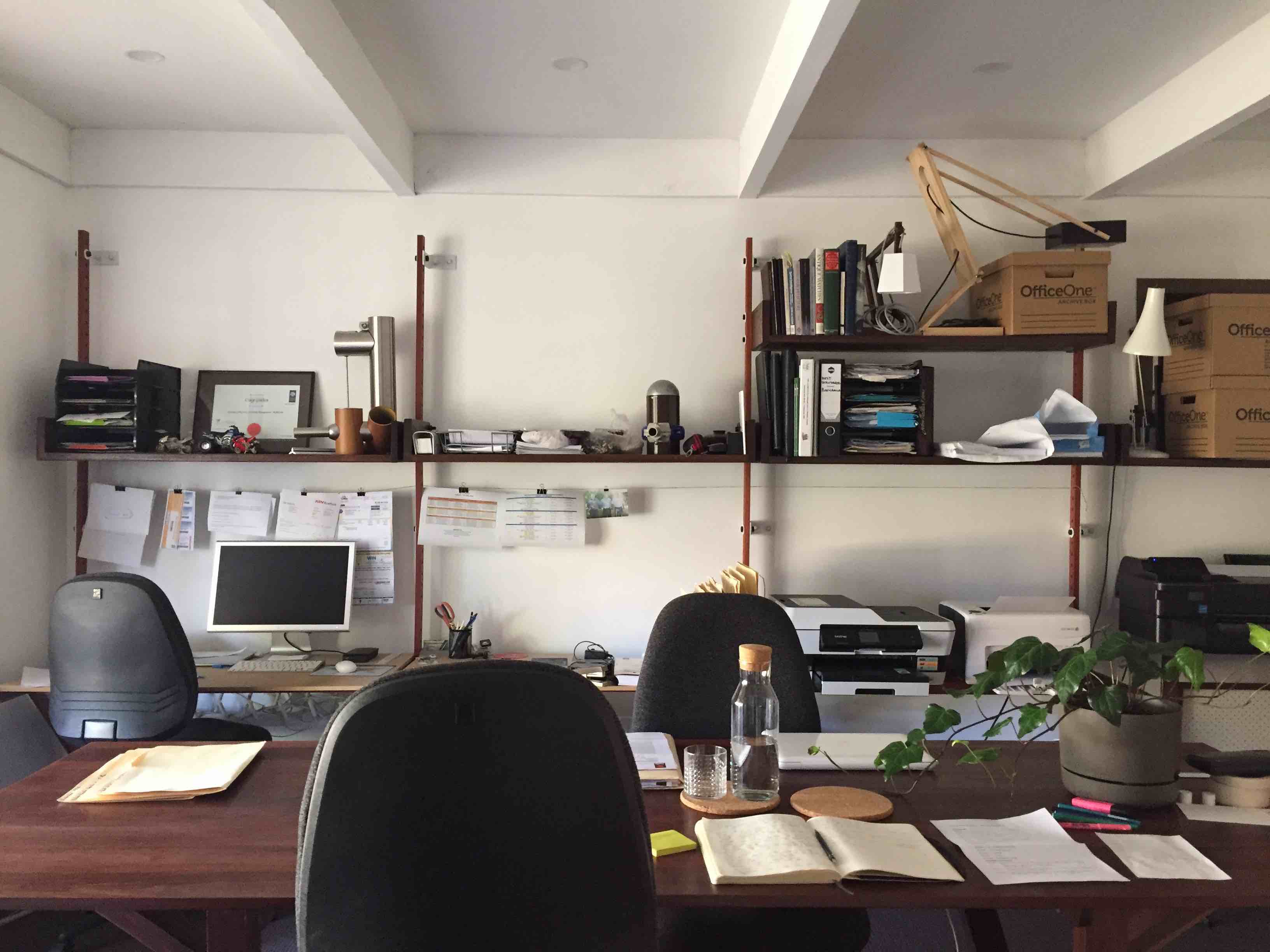
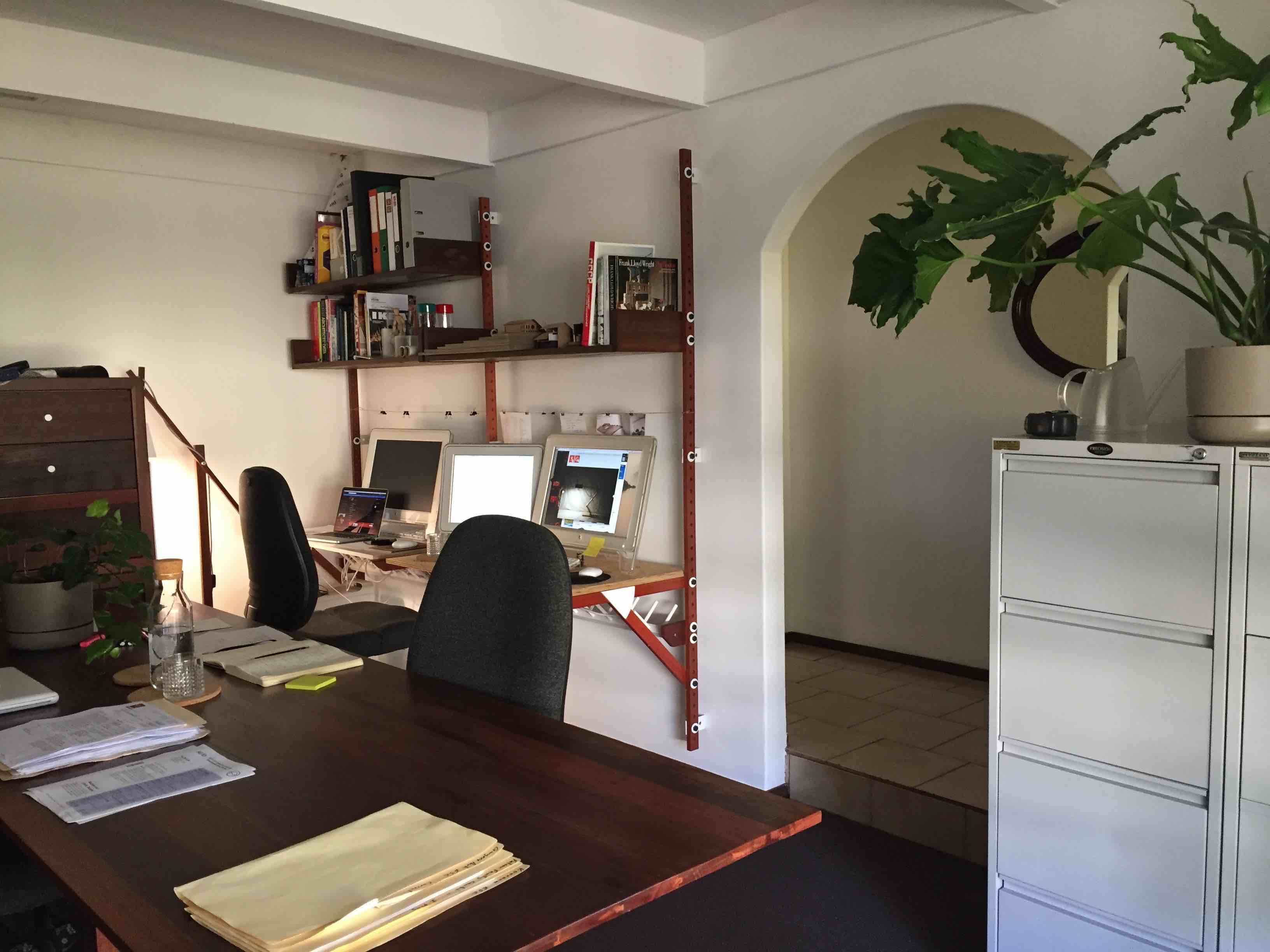

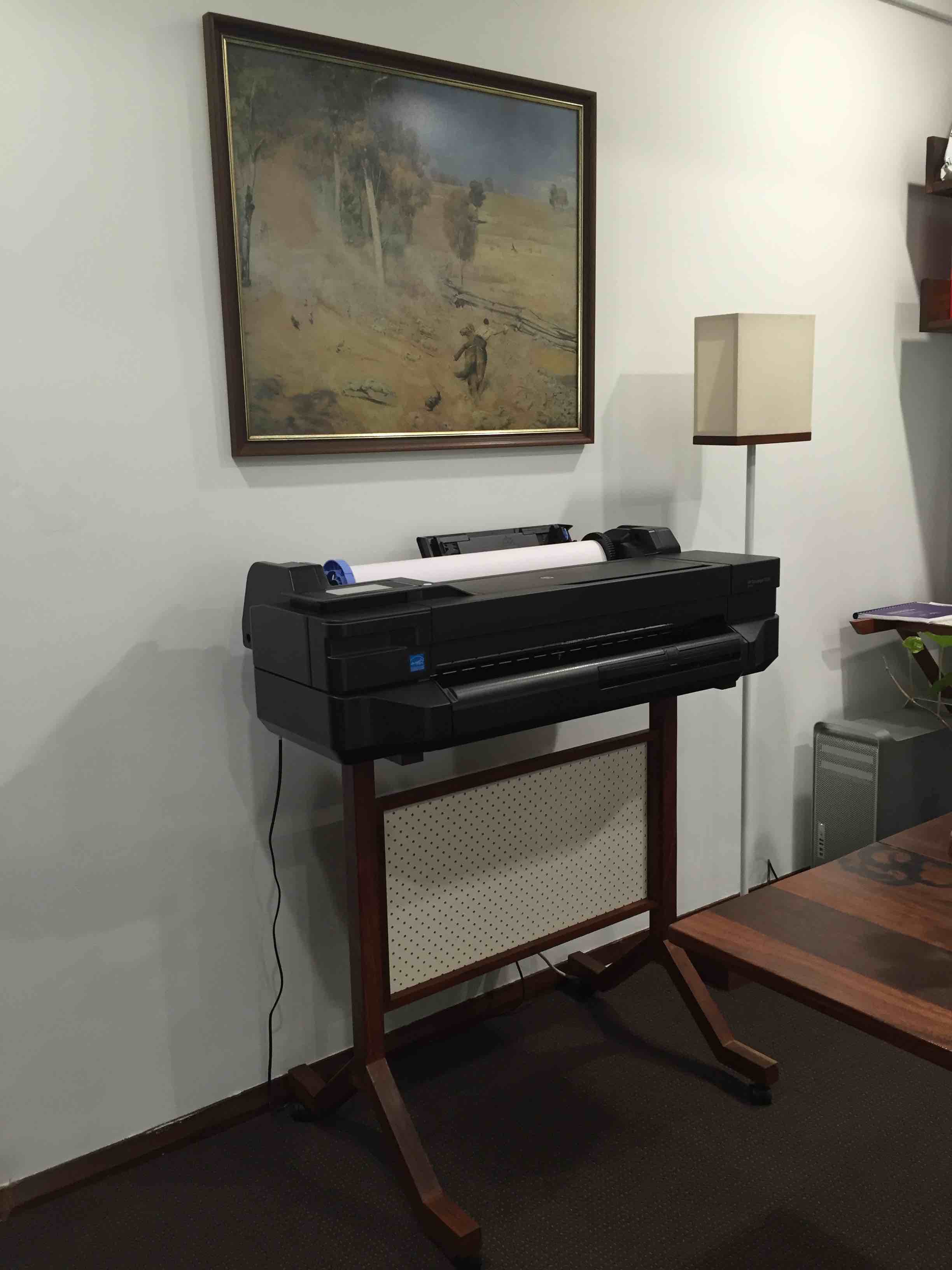
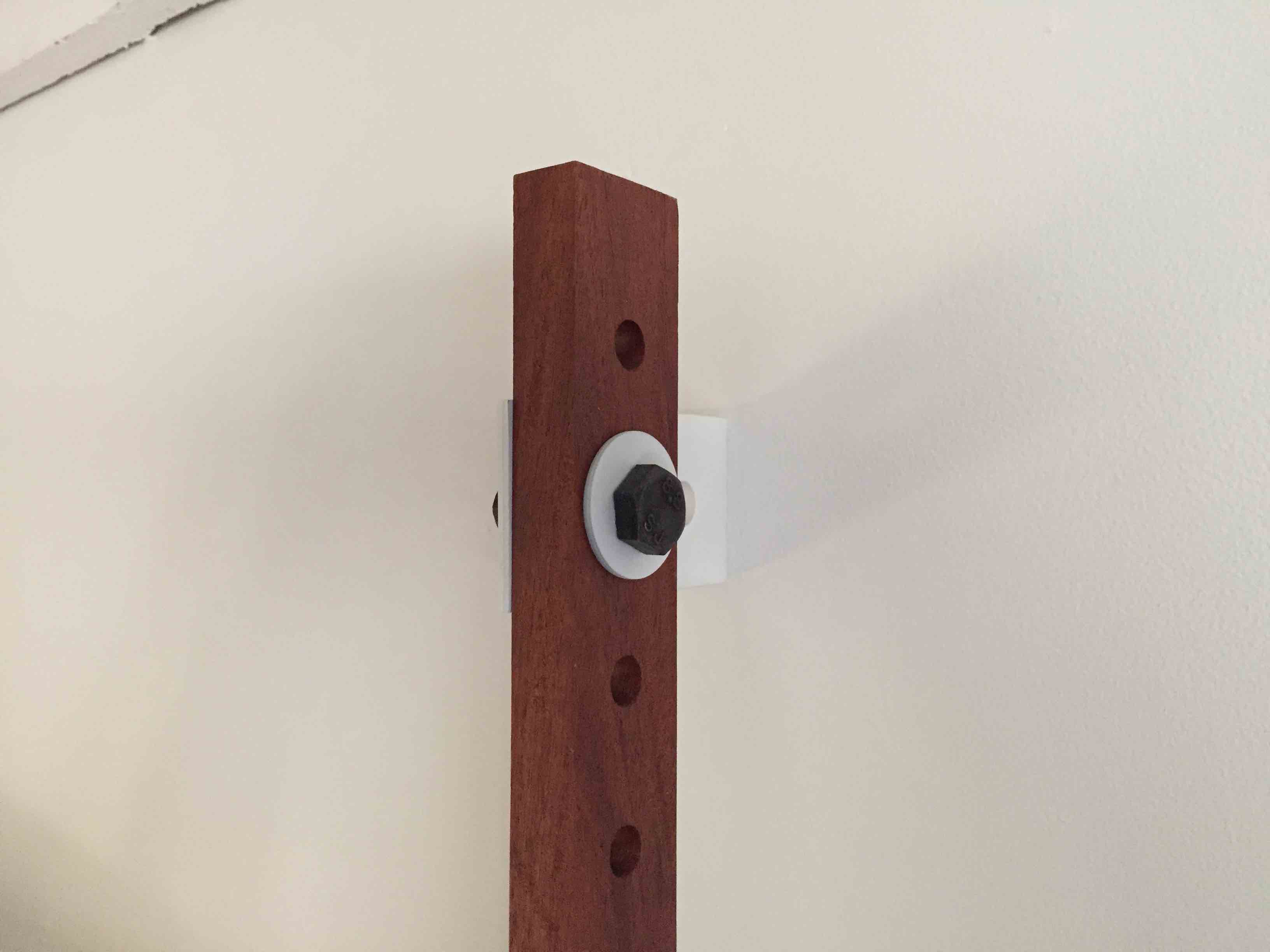
The intent for the home office was the need for spatial flexibility, to add and remove components of the office as needs of the users change. A rack system was designed which bolts onto the wall at even spacing allowing for desk conponents and shelves to be rearranged or removed. A cable organising system was designed to bolt onto the system as well which allows for cables to be wrapped around and kept off the floor. This makes cleaning the room easier and reducing the usual visual mess of cables that offices can have.
Spatially the office has an interplay of skeletal framed objects against a heavy sterotomic mass. The wall mounted racks, the desks and shelves that suspend through cantileaver in contrast to the stereotomic mass of the plan storage drawer, that sits in the room like a lump of lead. Its sheer mass and volume applies a weight of heaviness on the viewer. The desk and shelves on the otherhand have an illusion of lightness by which desk and shelves are spaced away from the wall making them appear to float. These two aspects of the space compliment each others opposite. One may enter the room and mentally cling to the solidity of the map storage in defence to the precarious nature of the desks cantiliering off the walls. In opposition a viewer can enjoy the open exposed design of the framework for there is nothing hidden about the desks or shleves. Upon investigation one can see how they work and understand its rational of forces being shifted to the wall and then the ground. The plan drawer on the otherhand is a sealed unit that invites many curious thoughts as to whats inside, it presents as an irrational force for the room.
The space aims to play into the viewers curiosities on two levels, exciting the viewer, and ultimately making the space mentally rich for experience.
Current work in progress.